How much does commercial solar cost in the West Midlands?
By Ben Sullivan, Director, Impression Electrical & Building ·
By Ben Sullivan, Director, Impression Electrical & Building ·
The honest answer to “how much does commercial solar cost” is that it depends — but not in the hand-waving way installers usually mean. It depends on a handful of specific things about your building and how it uses power, and once those are known the figure becomes clear. Here’s what actually moves the number for a business in the West Midlands.
Commercial solar is priced against your building and your electricity consumption, not a headline rate. The cost is driven by system size, roof type and access, and whether the electrical supply needs work. Two roofs of the same area can be very different jobs. That’s why we survey first and quote on the specifics rather than a per-kilowatt figure that changes the moment someone visits.
Four things account for most of the difference between one commercial quote and another:
You can get a sense of what shapes a system on our commercial solar page, and the same survey-first thinking applies to residential solar and battery too.
A per-kilowatt price is a useful marketing number and a poor engineering one. It hides exactly the things that matter — the roof, the supply, the access — behind a single figure, which means it’s either padded to cover the worst case or it moves once the real job is understood. We’d rather do the survey, look at your consumption data, and give you a figure that holds. Decisions on commercial solar should rest on your numbers, not a brochure. For the technical background on planning and permitted development for commercial installations, the Planning Portal is a good neutral reference, and the Energy Saving Trust covers solar basics in plain terms.
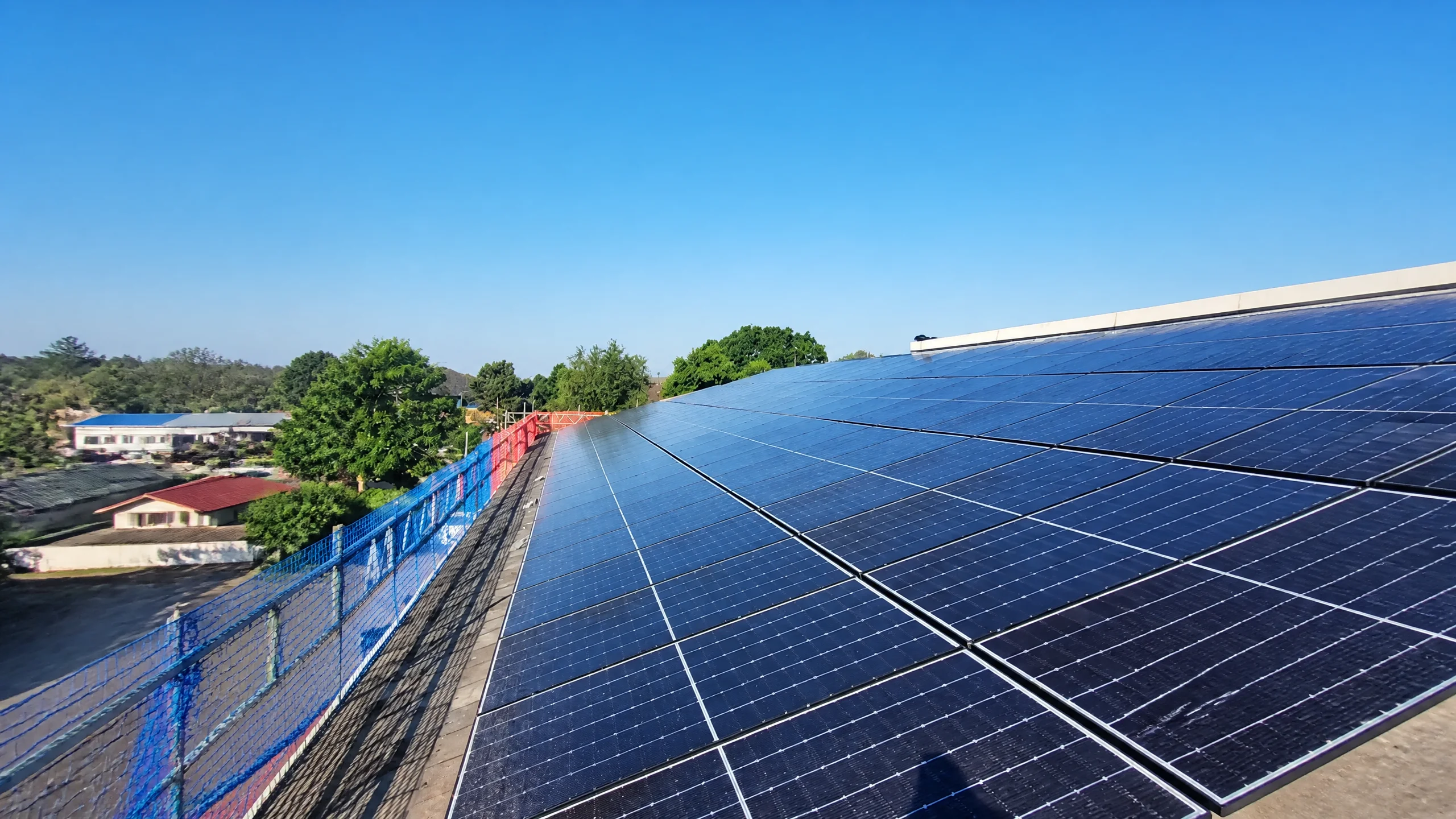
Our installation at Birmingham Business Park, near the NEC, was a 50kW system — 300 panels — for a multinational working towards a CO2 reduction goal. The roof was fragile enough that we worked entirely off roof boards and replaced damaged tiles as we went, so the building was left better than we found it. To date the system has generated 150MWh.
The point isn’t the exact price — it’s that a job like this is defined as much by the roof and the care it needed as by the panel count. A per-kilowatt quote would have told you almost nothing useful about it.
Commercial solar earns its keep by cutting the electricity you buy during working hours. So the question isn’t really “what does it cost” but “what does it save against what it costs, on our actual usage”. That comes from your consumption data and the roof, which is exactly what we look at before recommending anything. If the numbers don’t stack up for your site, we’ll tell you.
If you’d like a figure built around your building rather than a rule of thumb, start a commercial enquiry and we’ll arrange a survey.
Not a reliable one. Roof type, access, and whether the supply needs work move the figure enough that a per-kilowatt rule of thumb misleads more than it helps. We price against a survey and your consumption data.
It's set by your daytime electricity use and your usable roof, not a target kilowatt figure. The aim is to cut the power you buy during working hours, so the design follows your load.
It can, because protecting the building takes more time and care. On our Birmingham Business Park job the roof was fragile enough that we worked entirely off roof boards — that's part of doing the job properly.
Send us your site details and rough consumption, and we'll arrange a survey and come back with costed options.