Solar panel repairs: what usually goes wrong (and what it costs to fix)
By Ben Sullivan, Director, Impression Electrical & Building ·
By Ben Sullivan, Director, Impression Electrical & Building ·
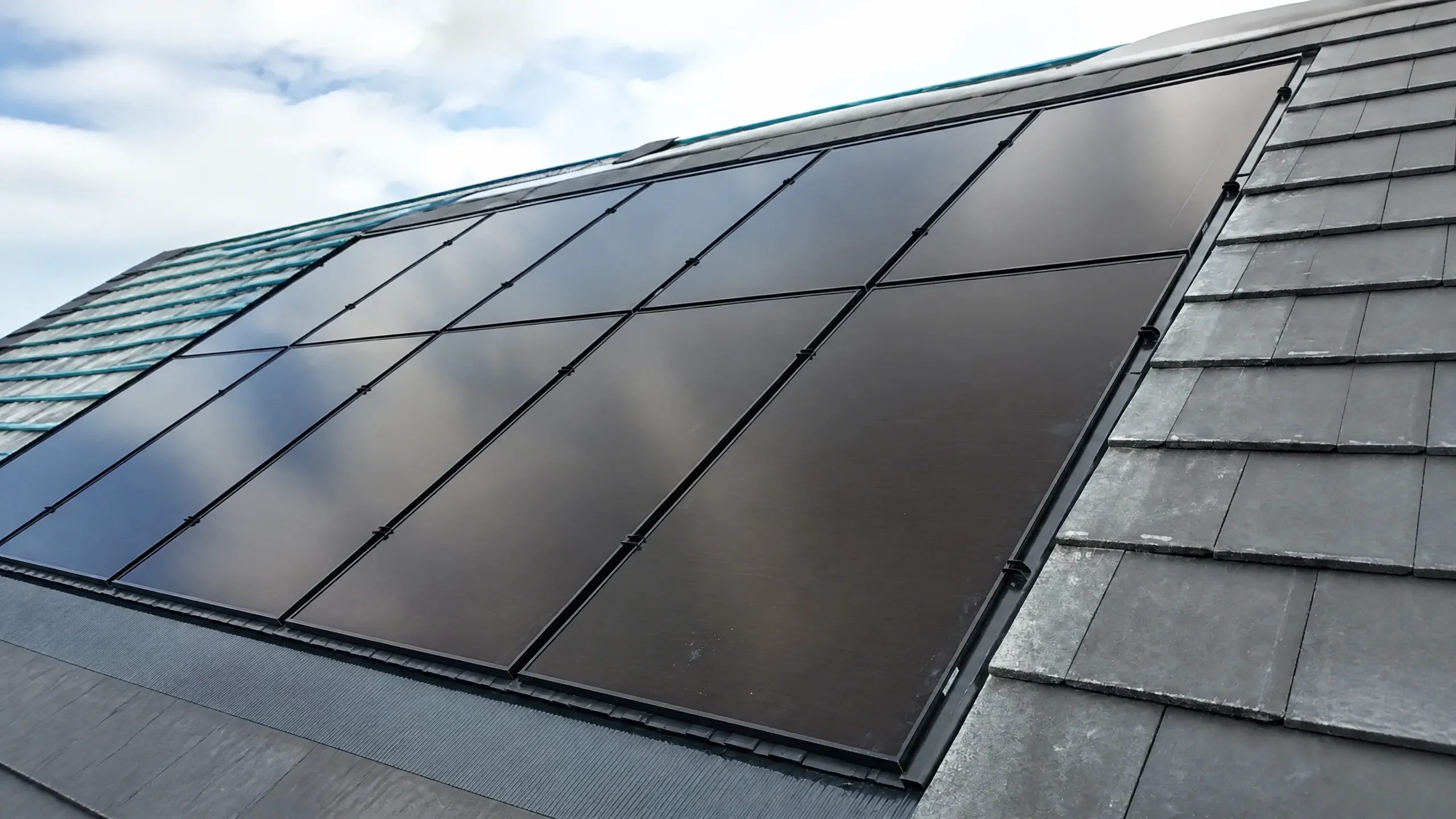
Solar panels themselves are remarkably durable — they’re glass and silicon with no moving parts, and they usually outlast everything around them. So when a system stops performing, the fault is almost always in the kit that supports the panels, not the panels themselves. Here’s what actually goes wrong, and what it tends to cost to put right.
Most solar faults sit around the inverter, the isolators, the wiring connections, or the monitoring that tells you the system is working. These are repairable, and a repair is usually far cheaper than replacing a whole system. The catch is finding an installer willing to work on a system they didn’t fit — which is where a lot of people get stuck.
We cover this work on our solar repairs and servicing page, and a regular service catches most of these before they cost you anything. For general guidance on wiring standards behind this kind of work, the IET is the authoritative body, and the Energy Saving Trust covers solar maintenance in plain terms.
People assume a drop in output means a dead panel, but panels degrade slowly and predictably over decades. A sudden change is far more likely to be an inverter fault, a tripped isolator or a failed connection. That matters because the fix is completely different — and much cheaper — than replacing panels. Diagnosing properly, rather than assuming, is the whole game. It also means you’re never sold a new system you didn’t need.
This is one of the most common reasons people call us. One customer bought a house with solar already fitted and could get no help from the original company — no battery schematics, no way to update the monitoring app to their details. We produced the schematics, spent the hours it took to work through it with the manufacturers, registered the system in their name and got it running properly. If you’ve taken on a system you know nothing about, that’s a solvable problem.
The solar industry has a repair problem: almost every installer would rather sell you a new system than fix the one you have. We take the opposite view. A repair to an inverter or a connection is a fraction of the cost of a replacement and gets you back to full generation, and we’ll tell you honestly when that’s the right call — and the rare times when it genuinely isn’t.
If your system isn’t doing what it should, start an enquiry and we’ll find out why. You can also read how we approach solar and battery installs from scratch.
Usually not. Underperformance more often traces to the inverter, an isolator, a wiring connection or the monitoring than to the panels themselves. Proper diagnosis finds the real cause before anything is replaced.
Yes. Taking on existing systems whoever fitted them is a core part of what we do — including ones whose original installer has gone quiet or won't help.
Very often, yes. A repair to the inverter or a connection is a fraction of the cost of a new system and gets you back to full generation. We'll tell you honestly which makes sense for yours.
Tell us what it's doing — or not doing — and we'll work out what's wrong and what it takes to fix.